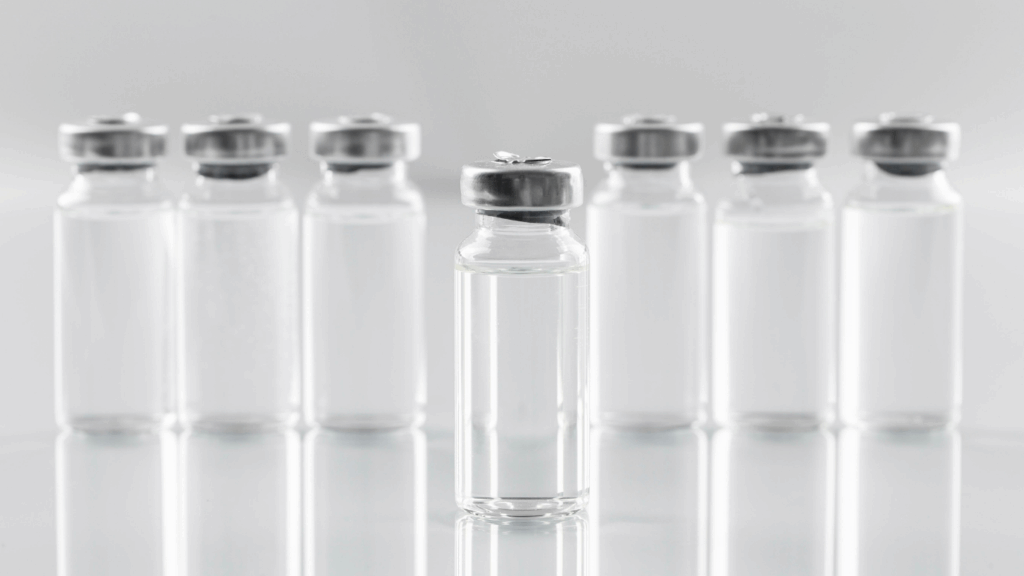
Glass vials are critical components in laboratories, pharmaceutical settings, and research facilities — serving as the vessels that hold sensitive liquids, reagents, peptides, and medicines. At EASYLABZ, we understand that the quality of a glass vial affects everything from chemical stability to sterility and performance. In this article, we’ll walk through the full manufacturing process of glass vials, the material choices, and why each step matters.
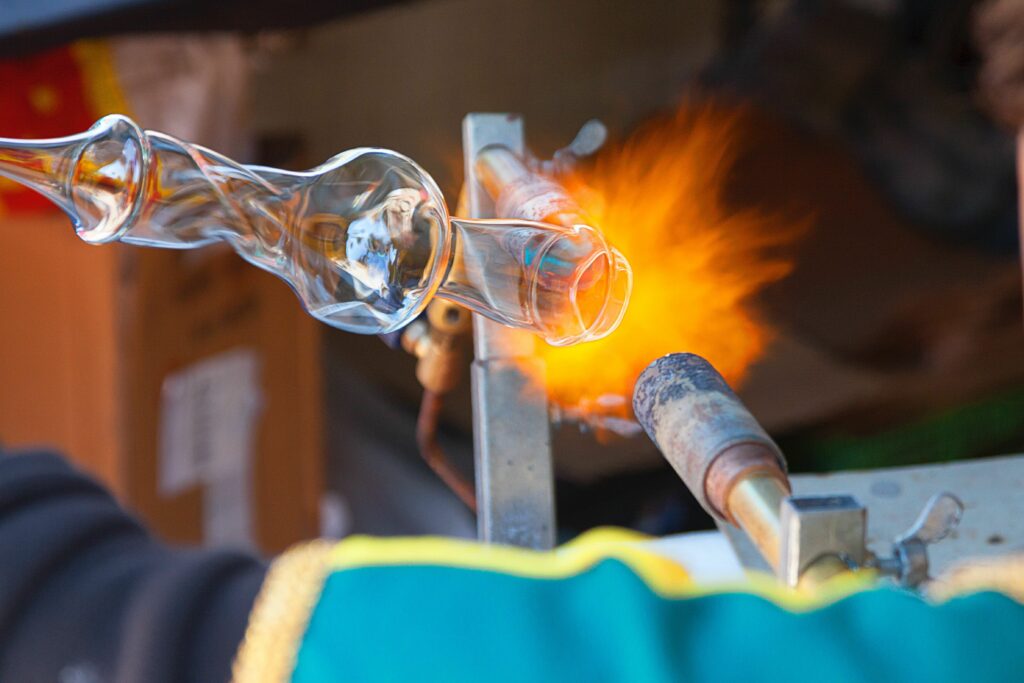
Previously glass was hand blown, now we are able to mass produce bottles through the method below
Raw Materials & Glass Composition
The journey begins with carefully chosen raw materials. Glass for vials typically includes silica (sand), soda ash, and limestone — and for high-performance vials (especially pharmaceutical use) boron oxide or alumina are often added to enhance thermal resistance and chemical durability.
The classification of the glass (commonly Type I borosilicate for injectable applications) is crucial because it dictates how the glass will interact with the stored contents, how it responds to sterilization or freeze-drying (lyophilisation), and how resistant it is to breakage or chemical leach.
Melting, Refining & Tube/Blank Formation
Once the raw materials are precisely weighed and mixed, they’re sent to a furnace where temperatures typically exceed 1,500 °C to melt the batch into molten glass. This molten glass then undergoes refining to remove bubbles and impurities, ensuring clarity and consistency. Depending on the vial type, manufacturers use either:
Tubular glass method: using long glass tubes (for example in Type I borosilicate) that are cut and formed into vials; or
Moulded (press & blow or blow & blow) methods: where a gob of molten glass is dropped into a mould, pressed or blown into a pre-form, then transferred to a finishing mould. Each method has pros and cons — tubular vials tend to have thinner, more uniform walls and are preferred for lyophilisation; moulded vials may cost less in larger sizes or different formats.
Forming the Vial Shape
In the forming stage, vials are shaped to precise dimensions and finish types (neck design, base shape, wall thickness). In a typical press & blow process, a plunger presses a parison, then the parison is transferred into a blow mould and air is blown to shape the vial. In the blow & blow process, two stages of blowing are used.
The neck finish — whether it’s a crimp neck, snap-cap finish, or screw finish — is formed during this step, along with the base, which may be flat or specially designed for stability or freeze-drying.
After forming, the vials are still at high temperature or contain internal stresses from uneven cooling. To relieve these stresses, the vials pass through an annealing oven (or lehr) where they’re gradually cooled under controlled conditions. This step ensures the glass is stable, crack-resistant, and safe for use in demanding applications.
Depending on the end use, glass vials may receive additional internal or external treatments. For example, coatings may be applied to improve lubricity (making stoppers easier to insert), or internal treatments (e.g., dealkalization) may reduce leaching of alkali ions for enhanced chemical stability. In pharmaceutical-grade vials, manufacturers often use Type I borosilicate glass, or enhanced aluminosilicate glass types, to provide superior chemical resistance and durability — especially for biologics, freeze-dried meds, or vaccines.
Inspection, Sterilization & Packaging
Quality control is critical. Vials are scanned with automated camera systems to detect surface defects, thickness inconsistencies, and internal stresses. They may undergo chemical resistance testing, hydrolytic testing, and mechanical strength testing to ensure they meet industry and regulatory standards.
Once cleared, the vials are cleaned, optionally sterilised, and packaged — often in clean-room conditions — for safe shipment and use. Packaging protects them from damage and contamination so they arrive ready for critical uses.
At EASYLABZ, we supply glass vials that meet the exacting demands of research labs, pharma, diagnostics, and clinical users. Understanding the full manufacturing journey — from raw materials to final inspection — helps us ensure every vial we ship maintains purity, clarity, integrity, and reliability. Your results depend on your tools, and your tools begin with the container.
SOURCES:
"Glass Packaging: Properties, Handling, and Storage" by The Society of Glass and Ceramic Decorators
"The Science of Glass" by Corning Incorporated
"Glass Science and Technology" by Wiley-VCH Verlag GmbH & Co. KGaA
We use cookies to ensure that we give you the best experience on our website. If you continue to use this site we will assume that you are happy with it.