The difference between ml vs mm confuses a lot of first-time lab buyers. Both start with “m,” and both appear on the same product labels. However, they measure completely different things. This guide explains what each unit means and where you see it. As a result, you can order the right parts the first time.
What mL Means
mL measures volume, or how much liquid something holds. One milliliter equals one thousandth of a liter. According to NIST, the milliliter is also a special name for the cubic centimeter. In other words, 1 mL and 1 cc are the same amount.
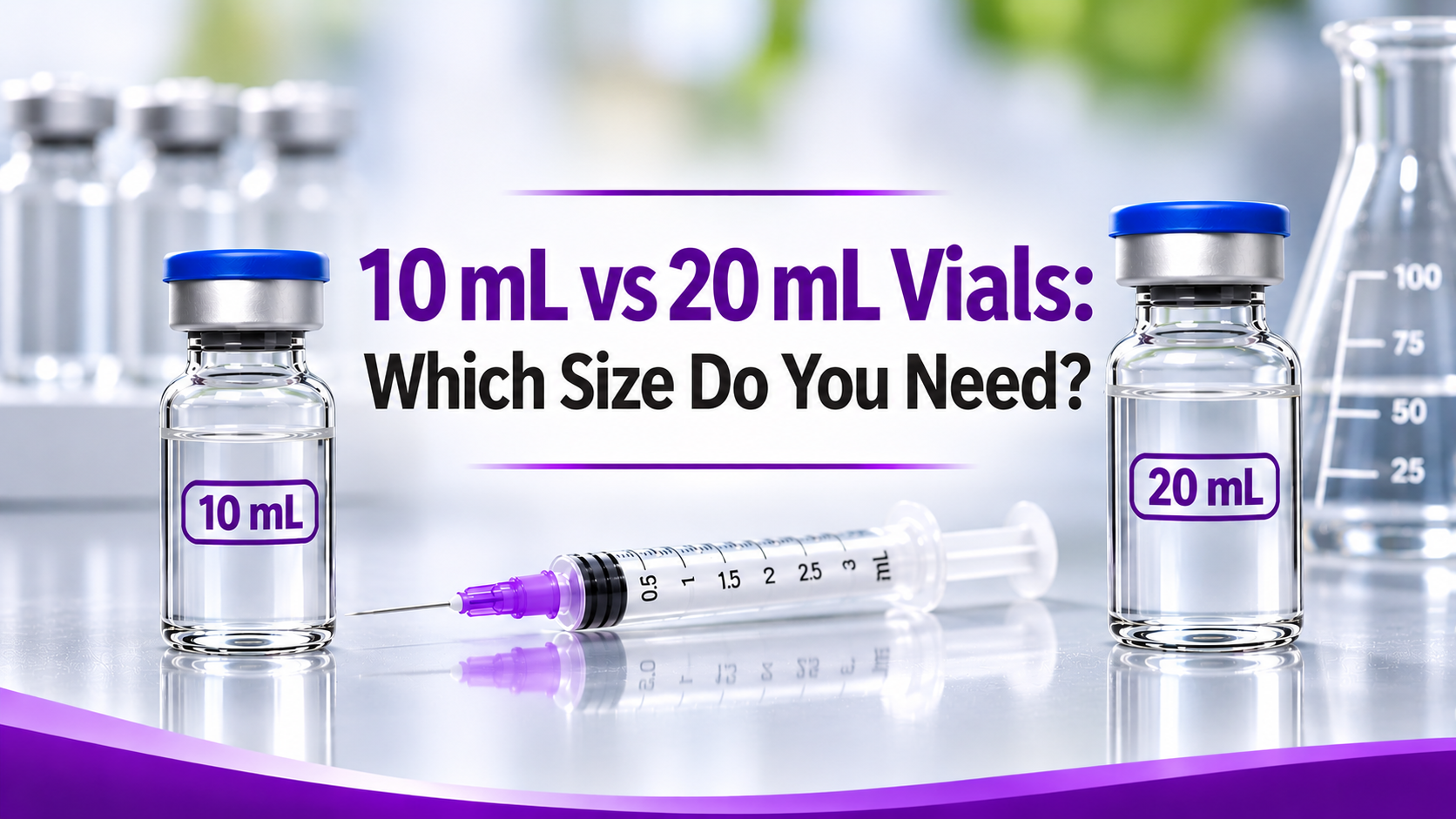
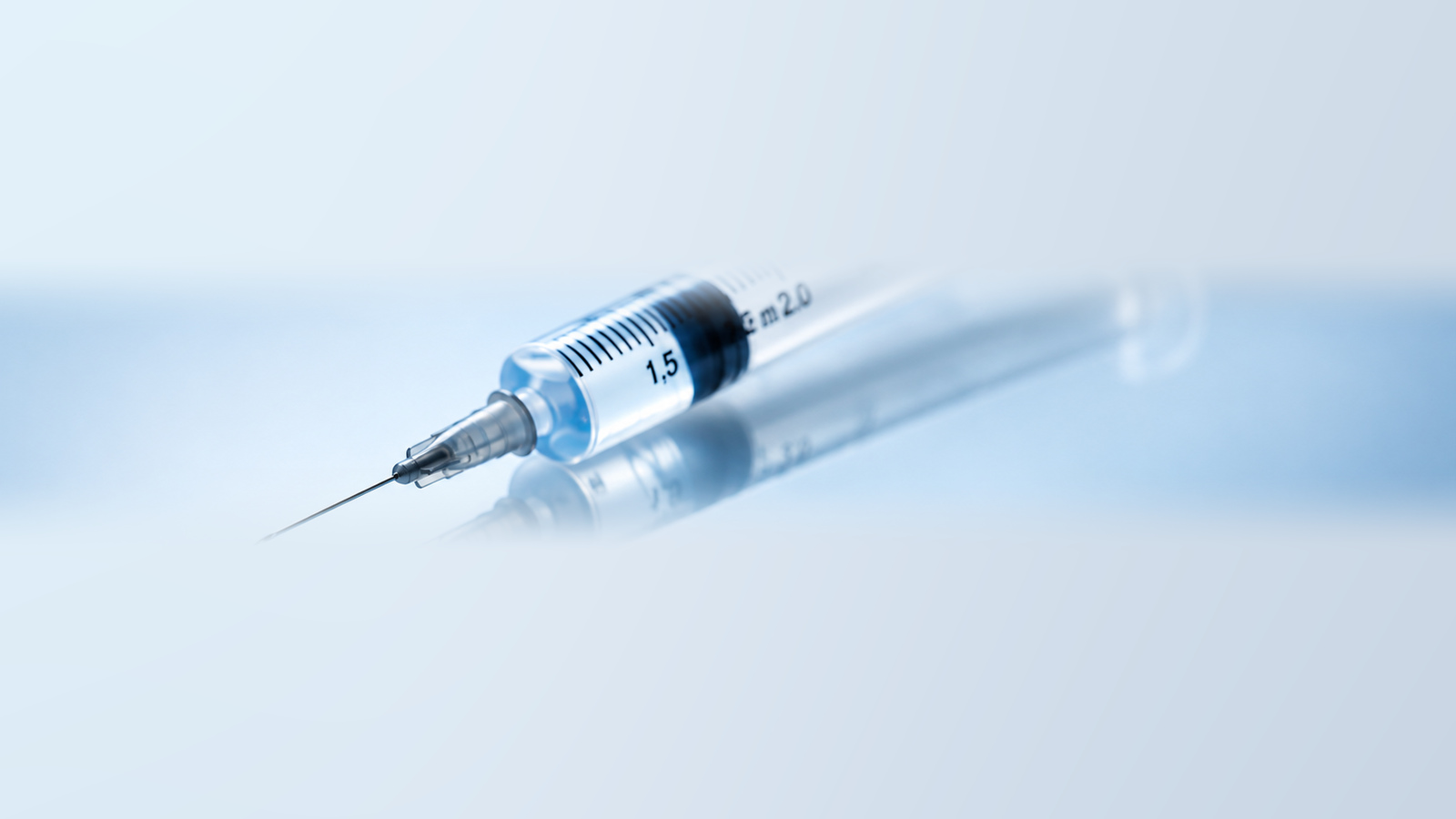
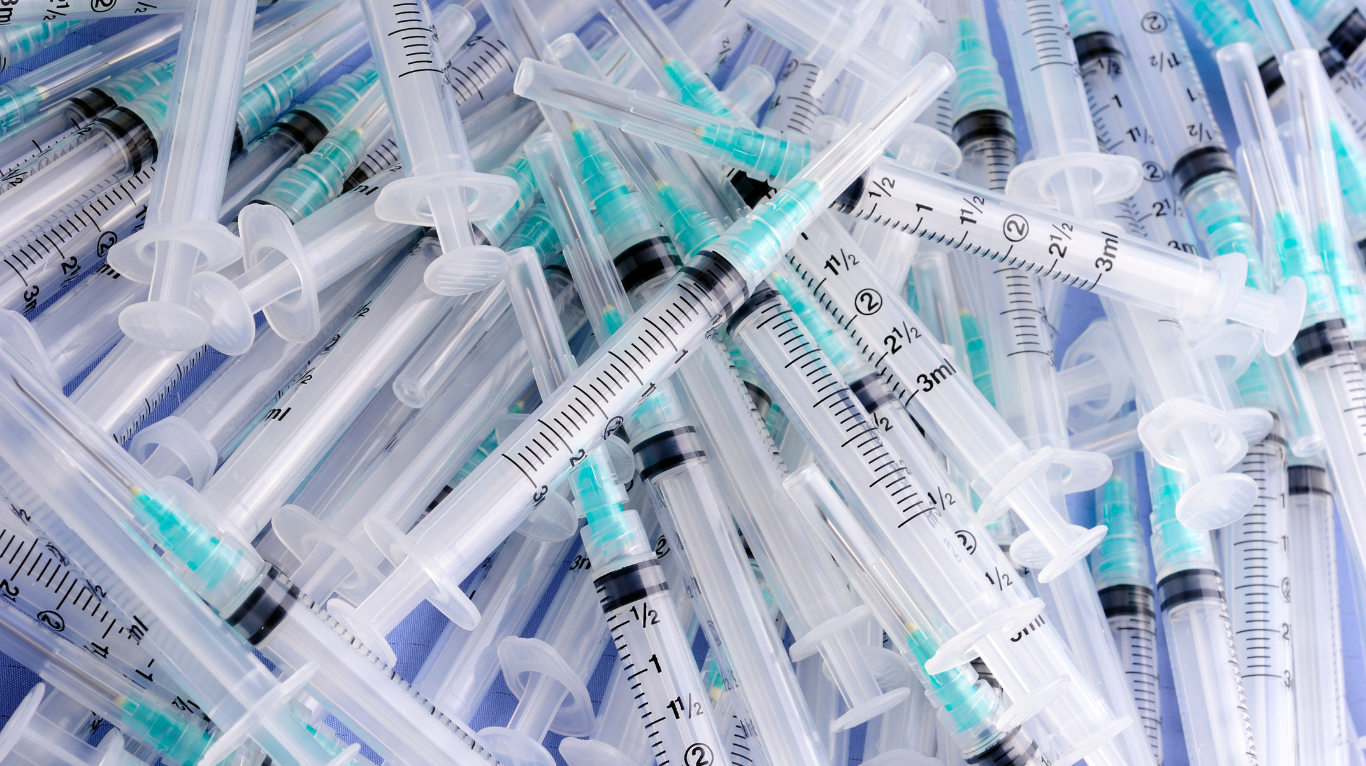
You see mL on vials and syringes. For example, a 10ml glass vial holds 10 mL of liquid. Likewise, a 3ml syringe draws up to 3 mL. Some older syringe labels still say “cc” instead. Don’t let that slow you down, because a 3cc syringe and a 3ml syringe hold the same volume.
What mm Means
mm measures length, width or diameter. One millimeter equals one thousandth of a meter. On vial parts, mm usually describes the size of the neck opening.
For instance, our 20mm rubber stoppers fit any vial with a 20mm neck. That number has nothing to do with how much the vial holds. In fact, our 10ml and 20ml vials both use the same 20mm stopper and the same 20mm flip off seal.
So when you shop, check two numbers. First, pick the mL size you need. Then, match the mm size of the stopper, seal and crimper.
How Syringes Use mL and Units
Syringe barrels show mL, but U-100 syringes also show units. A U-100 syringe holds 100 units in every 1 mL. Therefore, 50 units equals 0.5 mL, and 10 units equals 0.1 mL.
Our EasyTouch 1ml syringe uses U-100 markings, so the full barrel equals 100 units. Meanwhile, standard syringes like our 3ml syringe with a 22 gauge needle show mL lines only.
Where Needle Gauge Fits In
Gauge (G) measures needle thickness, and the scale runs backward. A higher gauge number means a thinner needle. For example, a 31G needle is much thinner than an 18G needle.
Needle length, on the other hand, uses inches on most US labels. So “25G 5/8 inch” means a 25 gauge needle that is five eighths of an inch long. For a deeper look, read our needle gauge guide.
Two More Abbreviations: M and mil
You may also see M and mil, but neither one describes our lab supplies. A capital M often stands for “thousand” in pricing. In chemistry, it also means “molar,” a measure of concentration. Mil, by contrast, means one thousandth of an inch. It measures thin materials such as plastic film.
Quick Reference
Keep this list handy when you compare product labels:
- mL (or cc): volume. Example: 10ml vial.
- mm: size or diameter. Example: 20mm stopper.
- Units: dose markings on U-100 syringes. 100 units equals 1 mL.
- G (gauge): needle thickness. A higher number means a thinner needle.
- Inches: needle length. Example: 1 inch.
Order the Right Parts the First Time
Now that you know the difference, building a vial setup gets easier. Start with a 10ml or 20ml glass vial set, which includes stoppers and caps. Next, add a 20mm vial crimper to seal each vial. Finally, choose your syringes and needles by mL size and gauge. Orders placed by 3pm EST, Monday to Friday, ship the same day from Tampa, FL.