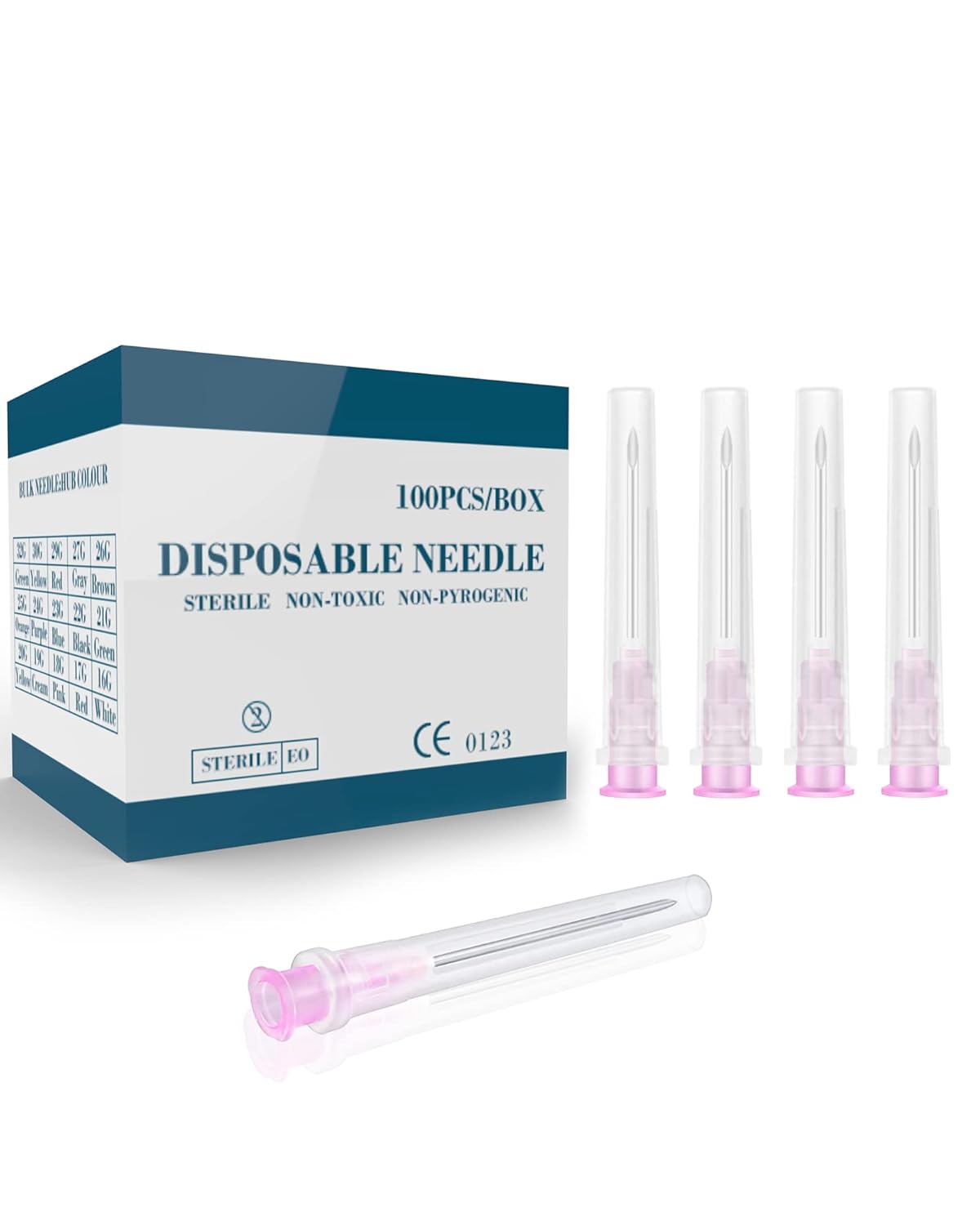
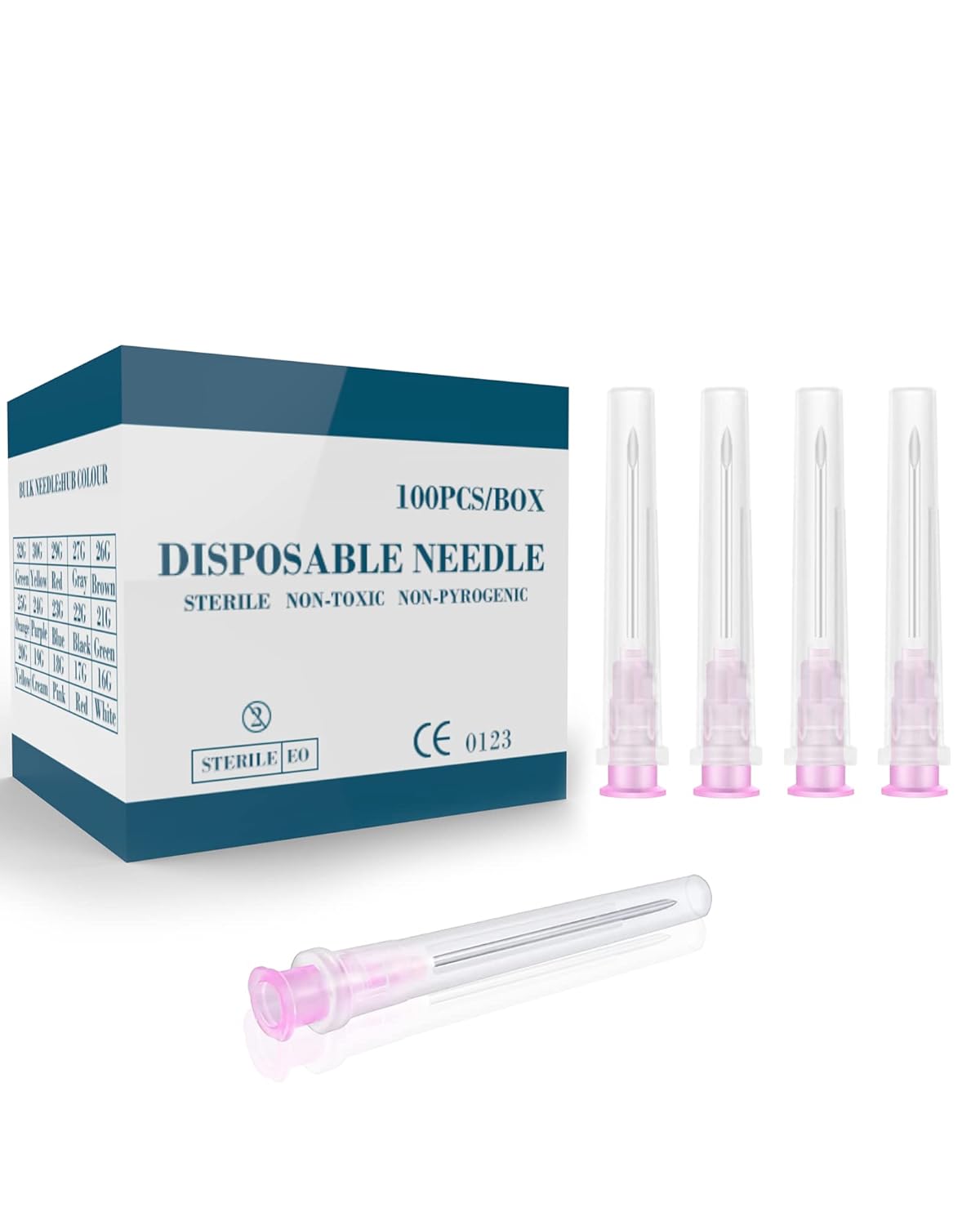
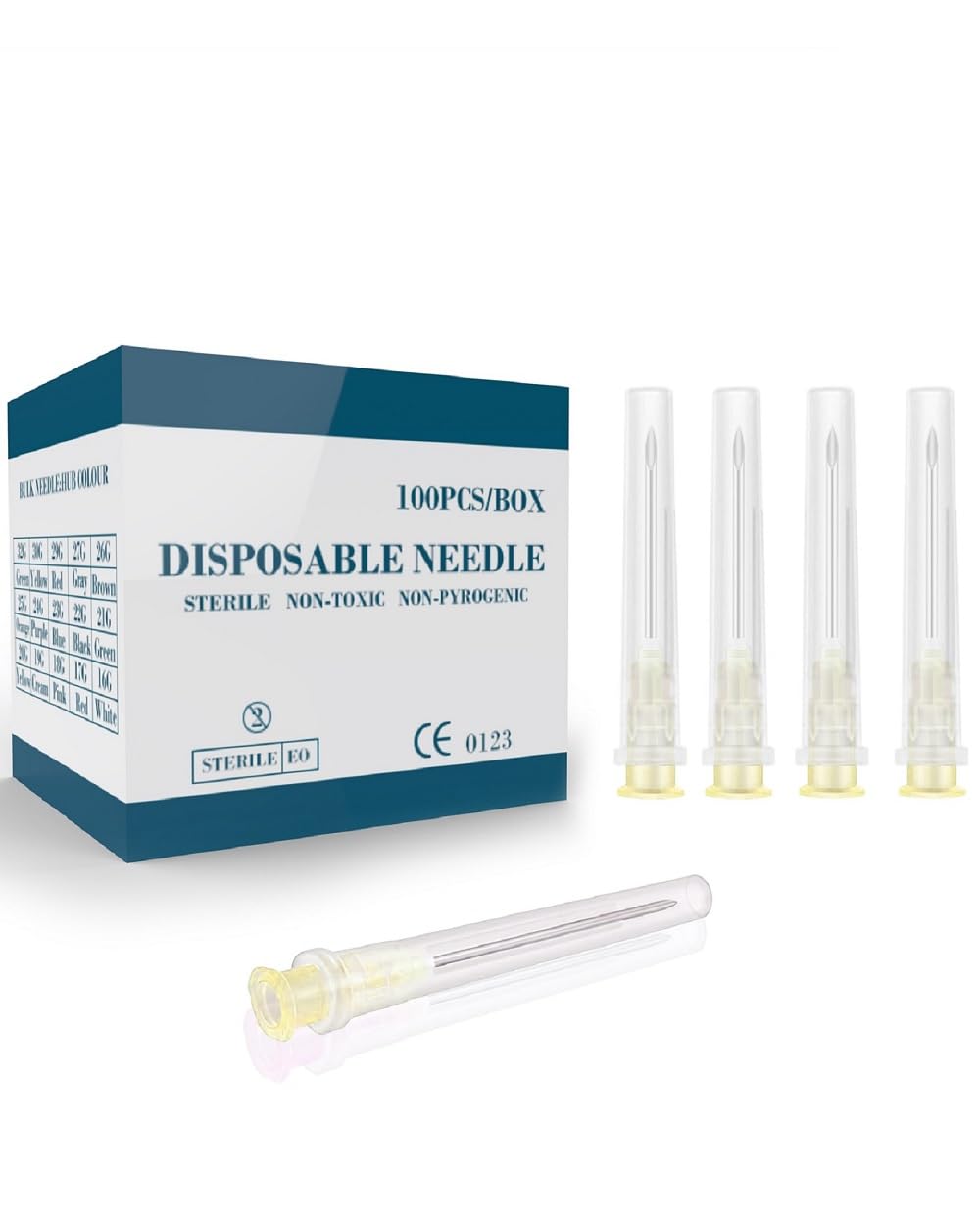
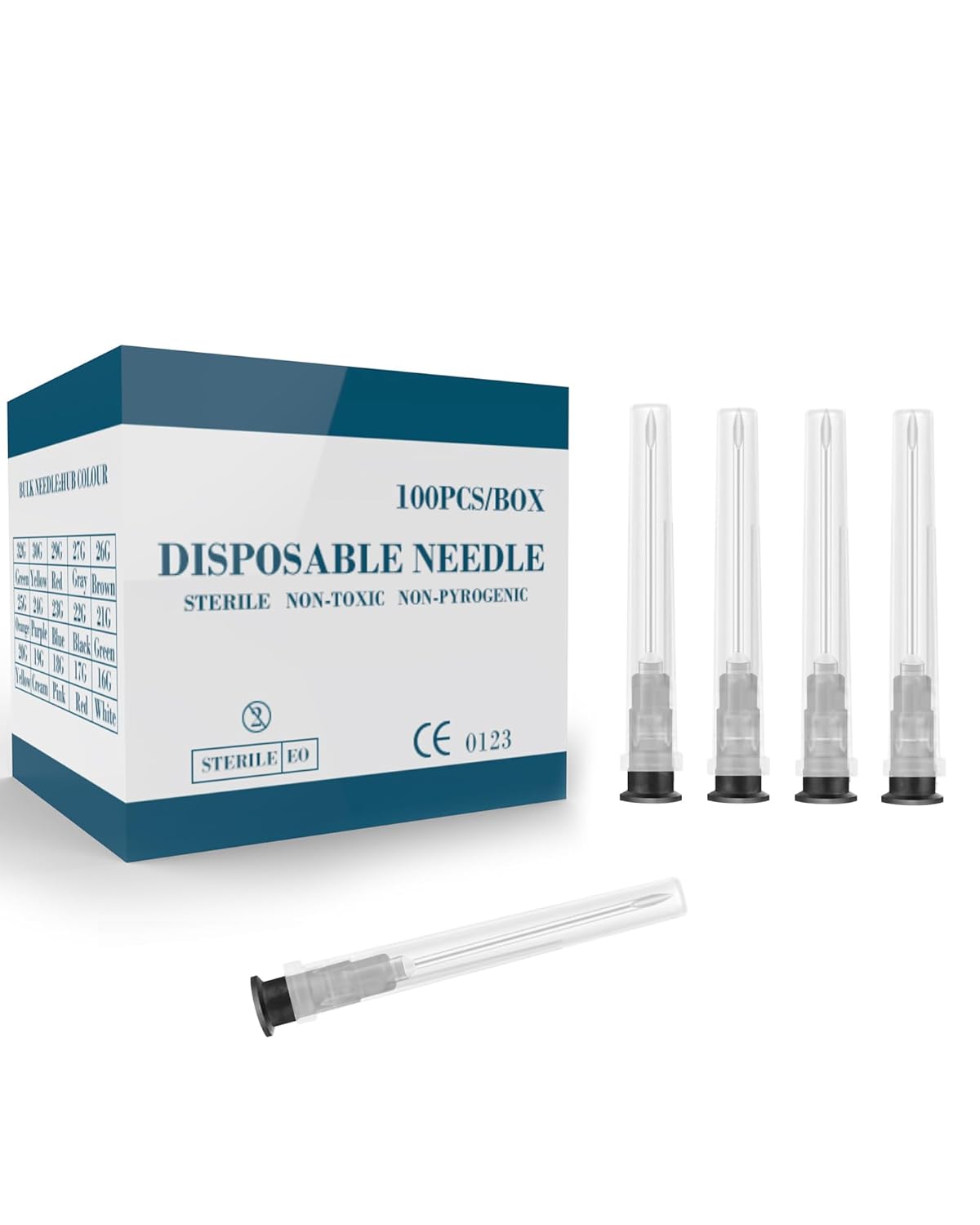
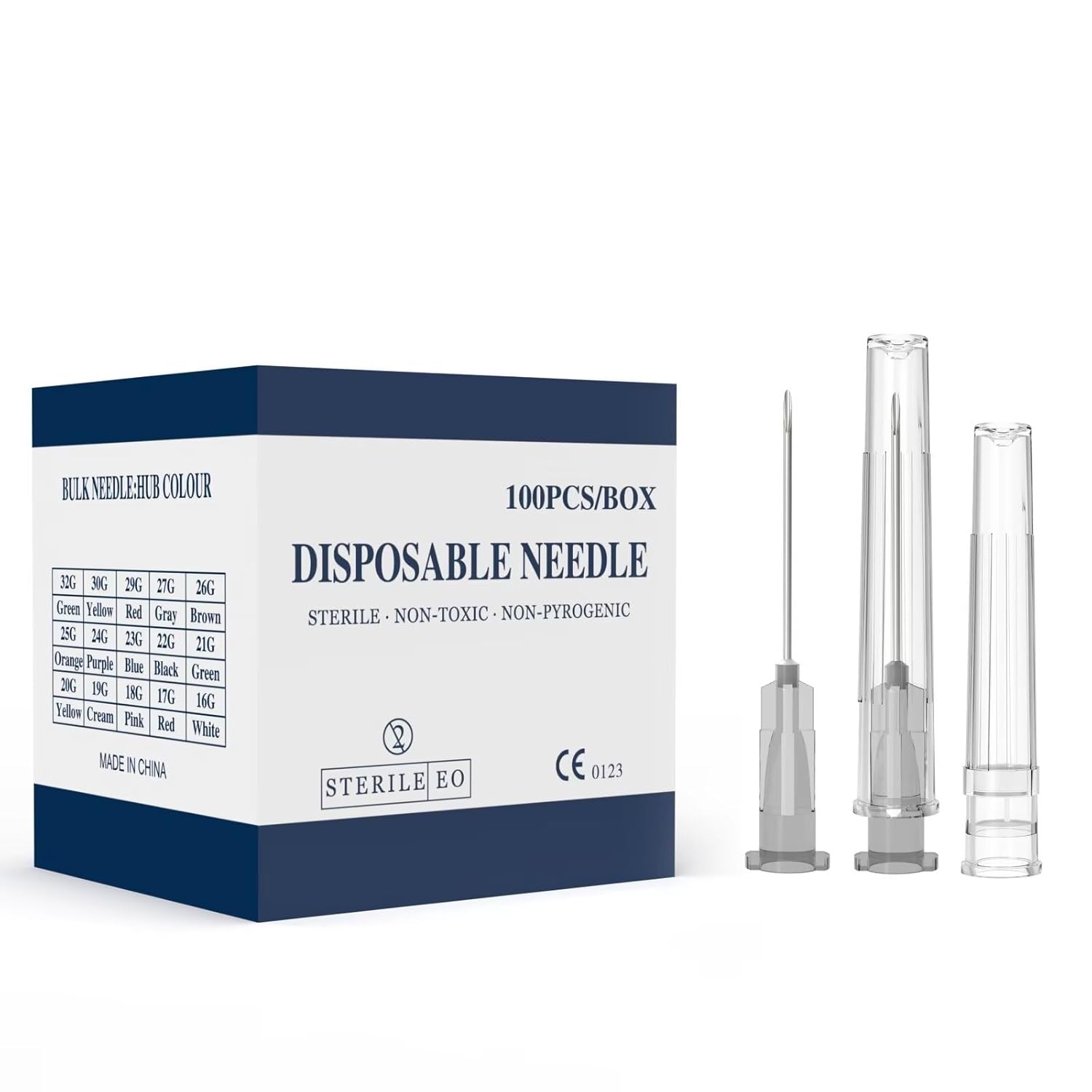
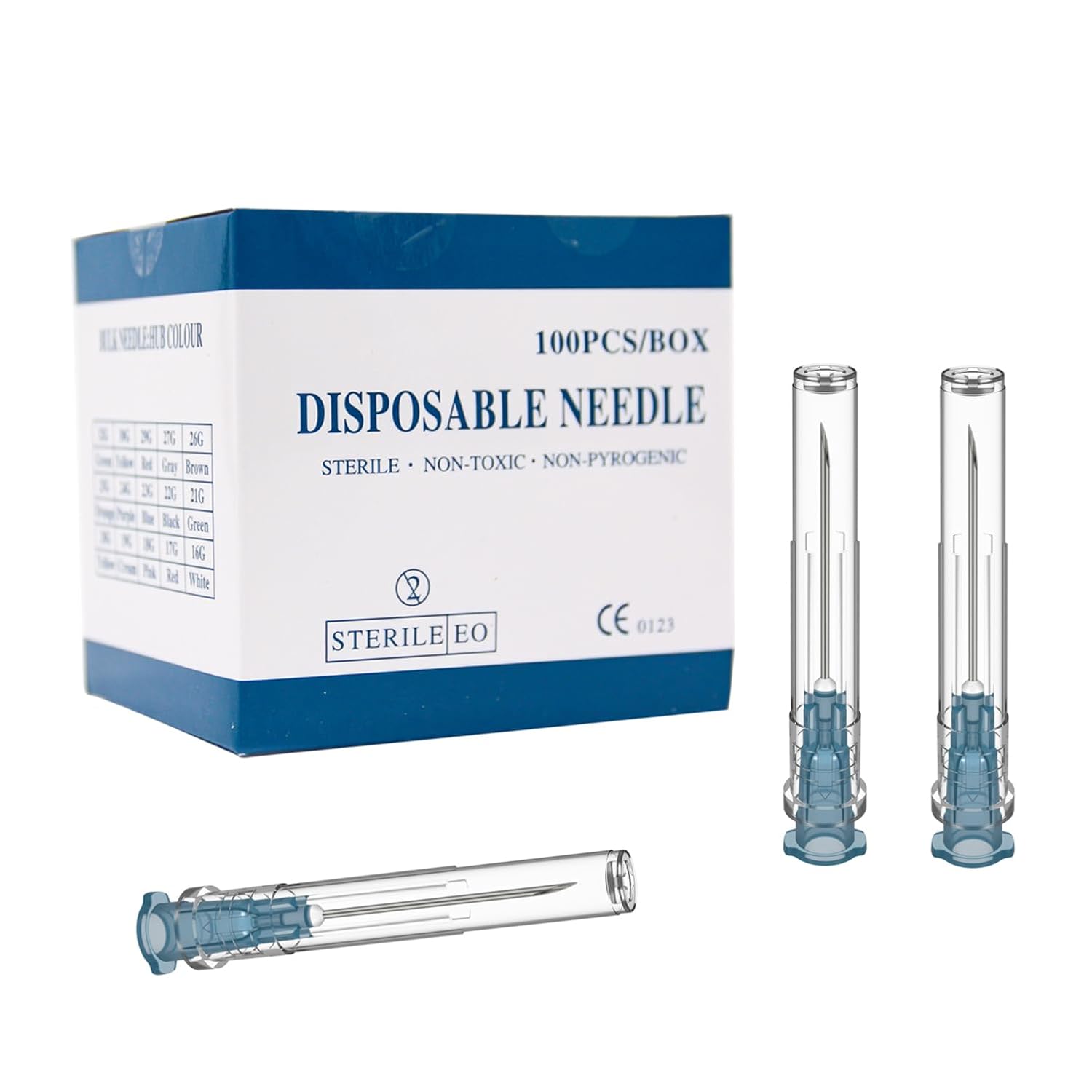
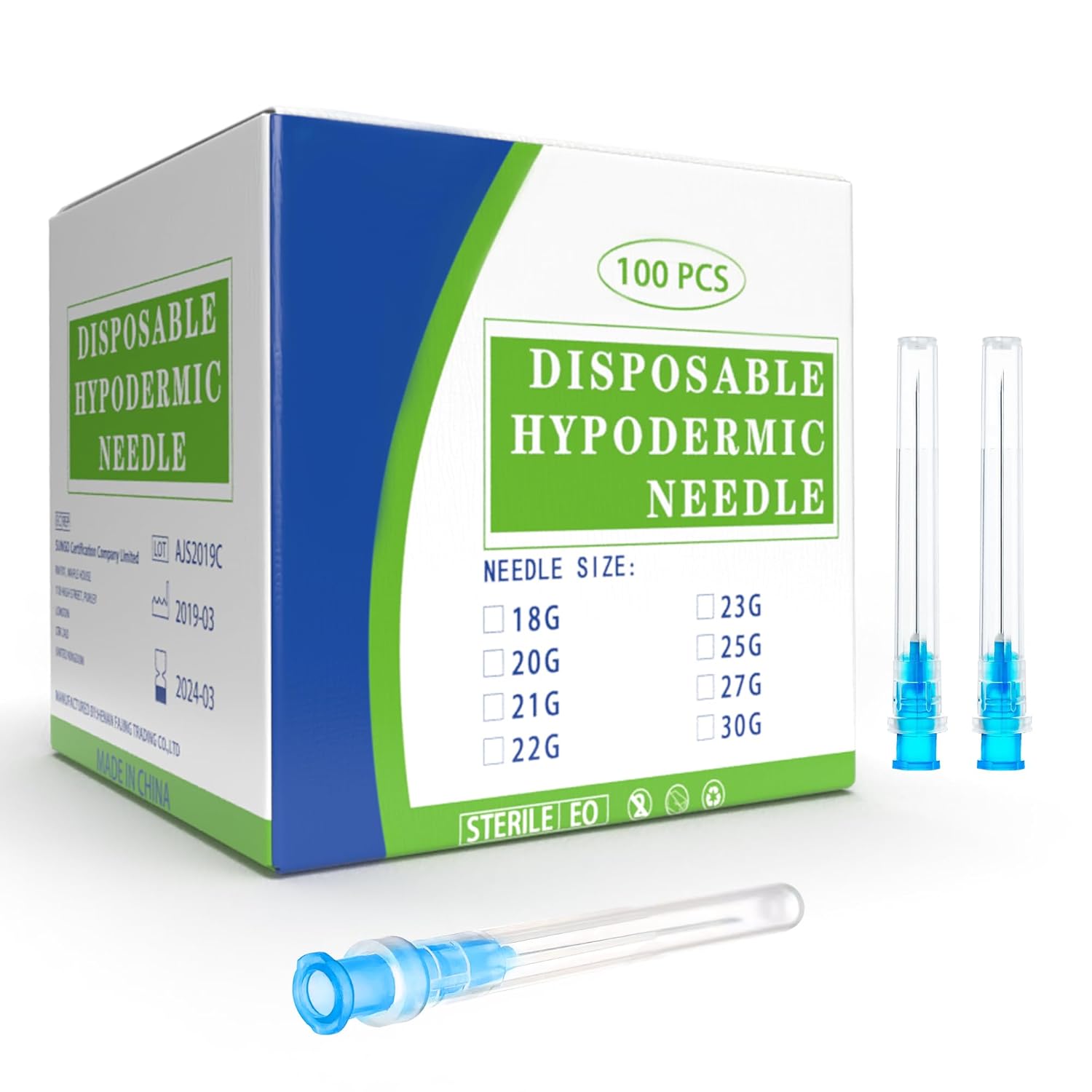
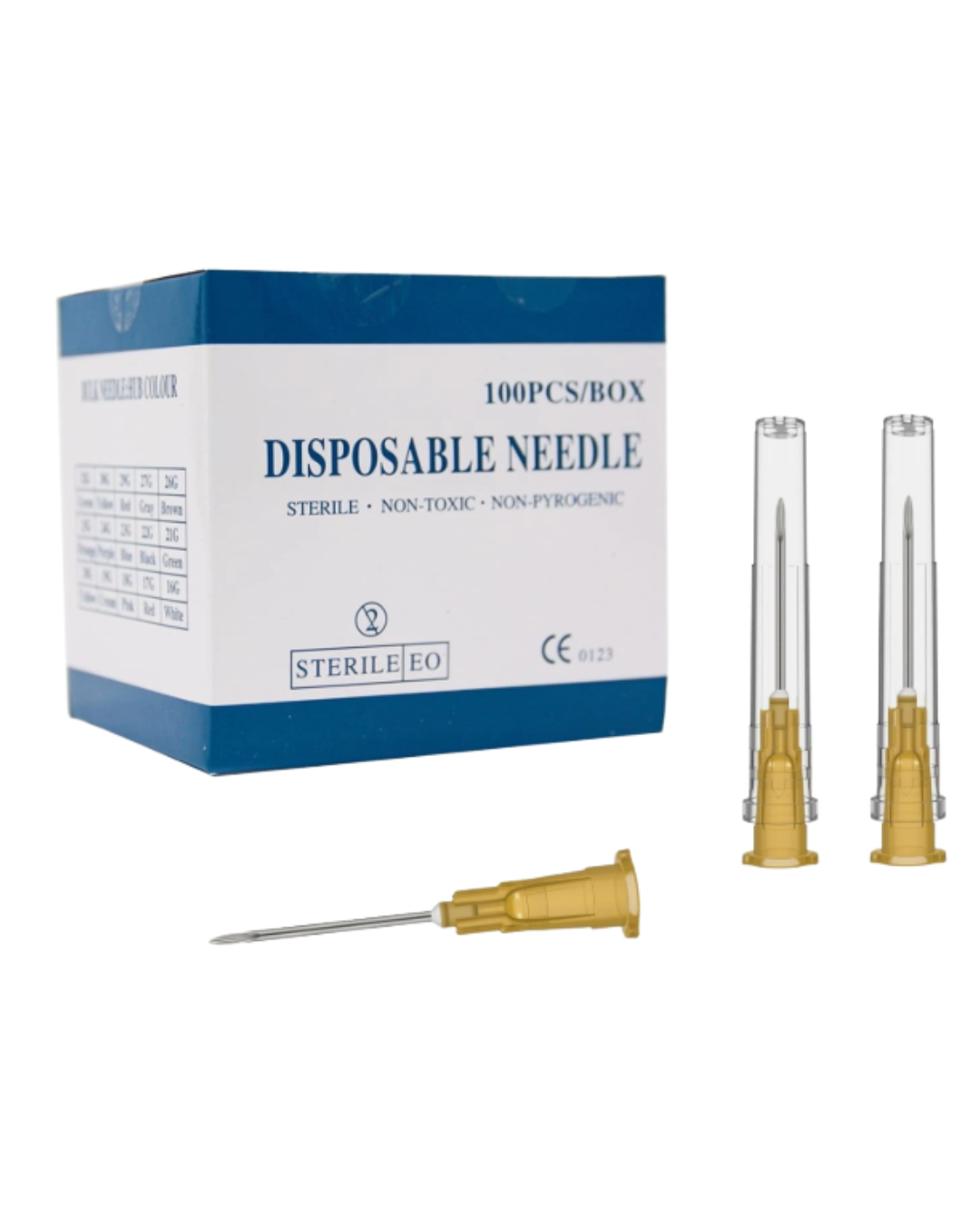
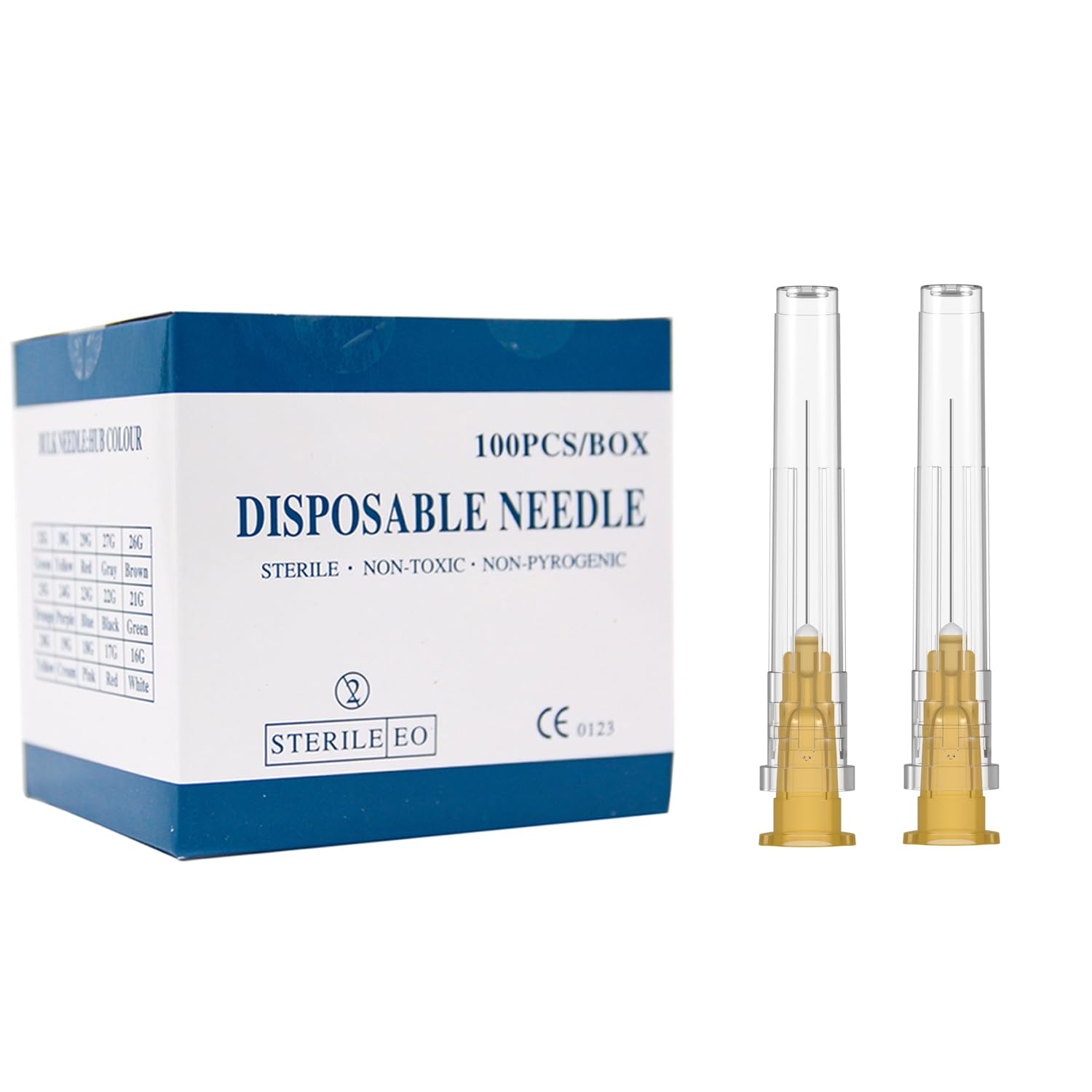
Sterile, single-use needles in 100 count packs. Pick from 18, 20, 22, 23 and 25 gauge, in 5/8, 1 and 1.5 inch lengths. A higher gauge number means a thinner needle. Each gauge has its own hub color, so you can tell sizes apart at a glance. They attach to our 1ml, 3ml and 5ml syringe only packs.
Orders placed by 3pm ET, Monday through Friday, ship the same day from the USA. Not sure which gauge to choose? Read our guide: How to Choose the Right Needle Gauge.
With our wide range of options, you’re sure to find the perfect research and lab supplies
Everything for a syringe or vial setup, from one US supplier you can reach by email.
Sterile where it counts – Syringes and needles are sterile and single-use. Glass vials and rubber stoppers are new and clean, but not sterile.
Parts that fit together – Our 20mm stoppers and 20mm flip off seals fit both our 10ml and 20ml glass vials, and our 20mm crimper seals them tight.
Bulk counts – Needles and most syringes come 100 to a pack. Vials, stoppers and seals come in sets of 10, 25 or 50.
Same-day shipping – Orders placed by 3pm ET, Monday through Friday, ship the same day by USPS with tracking.
Veteran-owned – We’re a US-based company in Tampa, Florida. Questions? Email info@easylabz.com and we’ll reply within 24 hours.
We use cookies to ensure that we give you the best experience on our website. If you continue to use this site we will assume that you are happy with it.